My Story
A question that never left me. A journey that continues to evolve.
My work is not just professional. It is personal. It began with a child's question and grew into a lifelong exploration of learning, people and systems.
Lived ExperienceFrom non-linear learner to education builder. Applied ResearchTesting frameworks and solutions in practice. Systemic InquiryShaping human-centered learning ecosystems.
The Question That Started Everything
A childhood label became the catalyst for a lifelong inquiry into how humans learn.
A Question Born in Childhood
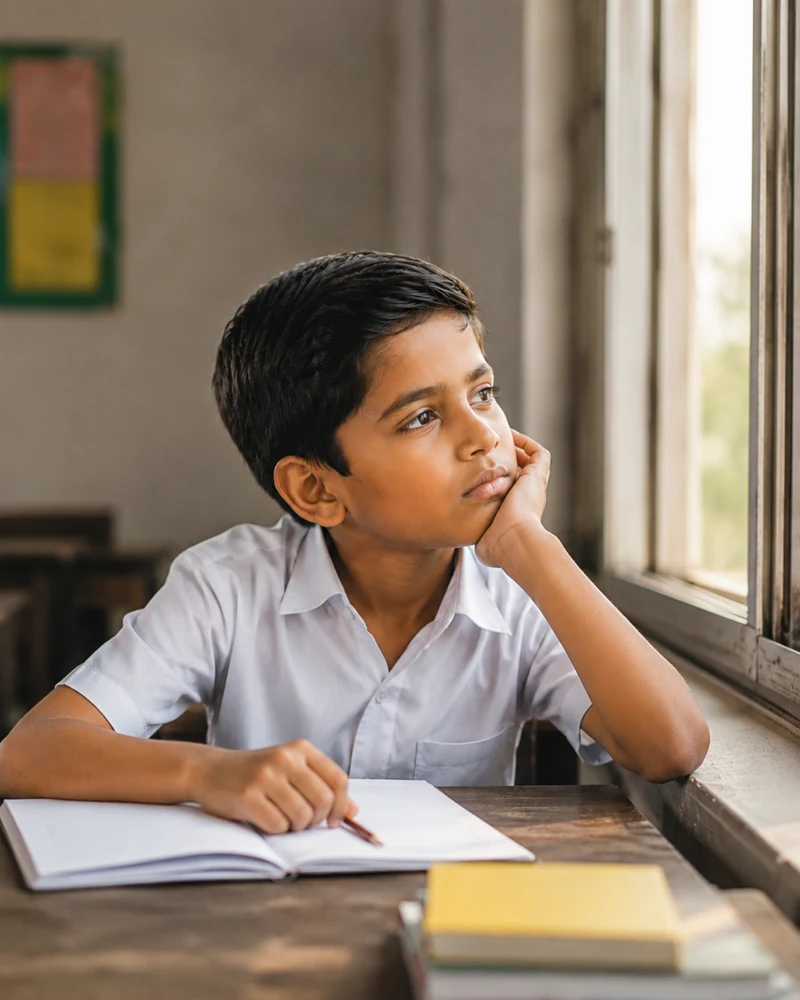
As a child, I was considered a slow learner. School was rigid, linear, and unforgiving to anyone who thought differently. Instead of accepting defeat, I asked a terrifying and grounding question: “If I cannot learn the way school expects me to, how will I survive in this world?”
Learning Outside the Classroom Walls
I turned my attention to the world around me. I watched craftspeople, traders, elders, and neighbors. I realized people were learning constantly—through curiosity, mental models, trial and error, resilience, and deep human relationships. Wisdom was everywhere, even if the classroom could not measure it.
Choosing Purpose Over the Expected Path
As my work developed, opportunities appeared that could have taken me down conventional paths. Two decisions, in particular, helped clarify what I wanted my work to become.
2019 — When Funding Wasn't the Goal
In 2019, I had an opportunity to pursue external funding for my work. I chose not to. Raising money was not the impact I was trying to create; funding can accelerate a mission, but it should never become the mission. Passion, purpose, and a conviction that the problem was worth solving guided me to understand the problem deeply and experiment freely before allowing financial milestones to define success.
Choosing the Work Over the Title
Professors and researchers encouraged me to pursue a doctoral path based on my research findings. I seriously considered it, but chose not to. My strongest motivation was not obtaining the title of Dr., but taking research beyond papers and academic discussion—turning ideas into experiments, frameworks, products, and solutions tested in the real world. I wasn’t chasing a title. I was chasing the questions.
The Three Dimensions of Knowledge
Childhood observation revealed that formal schooling was only one expression of human capability.
Formal Knowledge
What institutions explicitly teach through structured curriculum, courses, syllabi, and classroom instruction.
Practical Knowledge
What people acquire through experience, craft, trade, calculation, and solving everyday real-world challenges.
Experiential Wisdom
What people develop through living, adapting, reflecting, overcoming failure, and observing human nature.
Archival Journey & Early Roots
From early childhood observation to global education research and systems development.
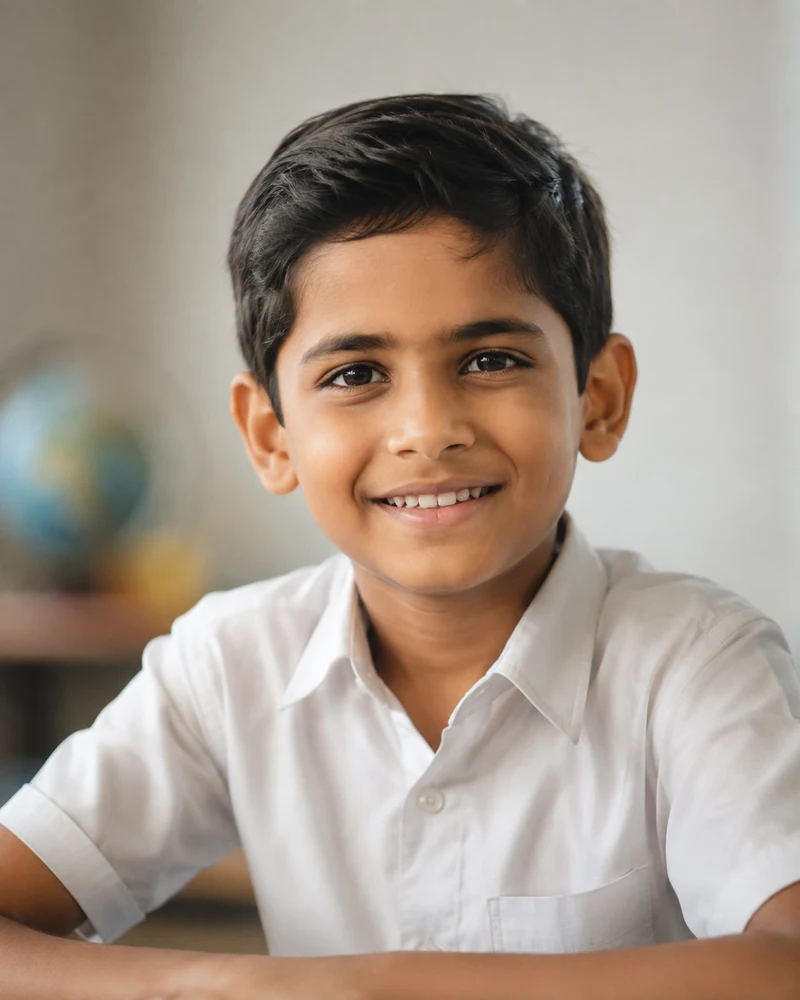
Where the Question Began
Young JR Yeruva, beginning the personal reflections that challenged the linear schooling model.
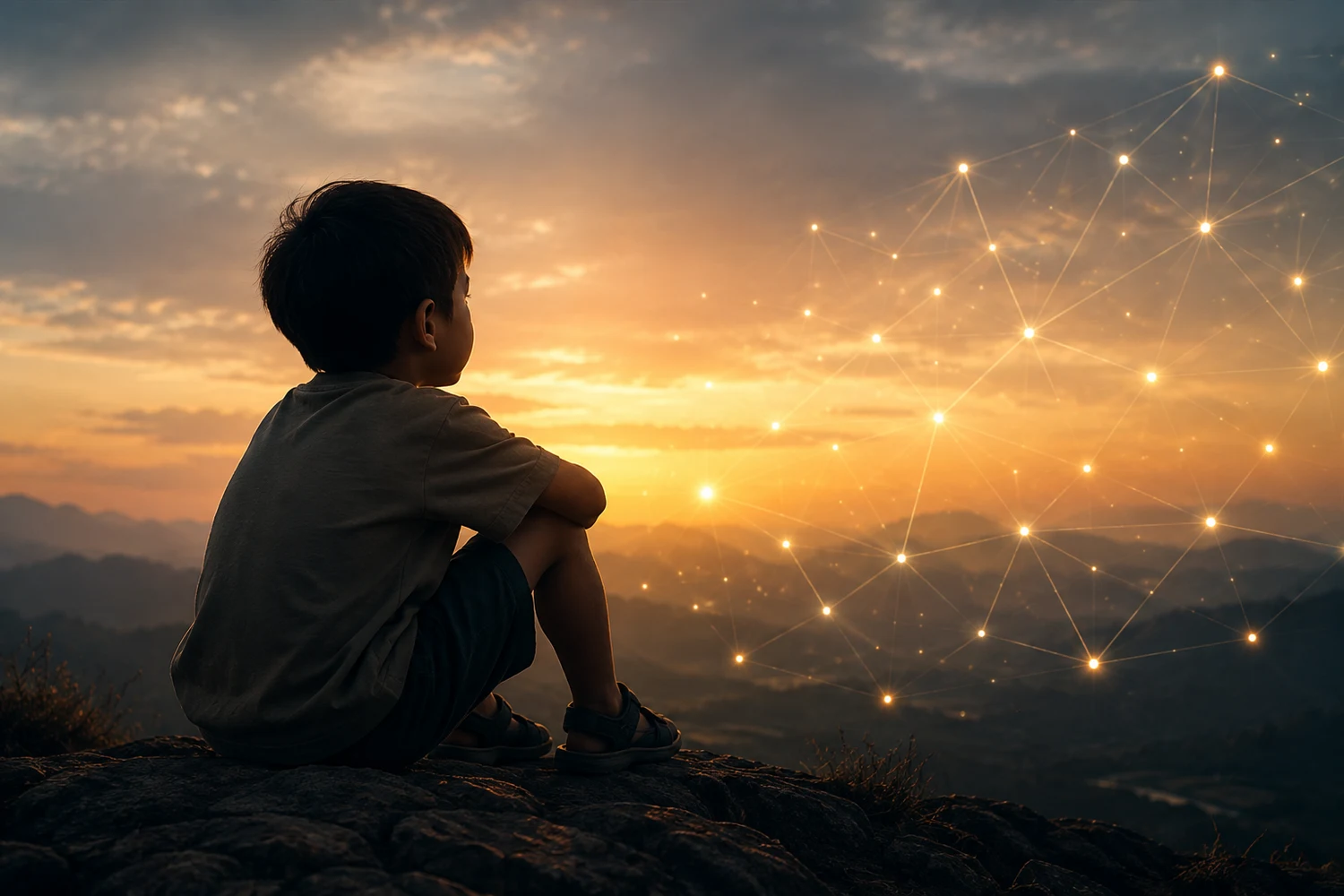
The Natural Environment
Growing up surrounded by open land, discovering that community, observation, and environment are lifelong teachers.
Independent Study
Developing self-directed inquiry and curiosity when formal schooling failed to accommodate non-linear learners.
The Journey from Code to Community
Building software tools, collaborating with educators, and discovering the deeper need.
Classrooms to Technology Systems
Entering technology and education, I saw school systems struggling with fragmented databases, siloed software, and administrative friction. We built solutions that worked, but technology alone never answered the human question.
The Shift to Living Ecosystems
Real learning is not a factory assembly line. It is an ecology. A learner sits at the center of family, community, nature, mentors, and tools. When all these dots connect, human potential flourishes organically.
Core Convictions
Life Is Not Linear
Human development does not proceed in neat annual increments. It branches, pauses, reflects, and surges.
The Learner at the Center
Curiosity and human agency are sacred. Systems must adapt to the learner, not force the learner into the mold.
A Movement, Not a Product
My mission is to help shift global education from rigid institutions to supportive, human-centered ecosystems.
The journey changed. The question remained.